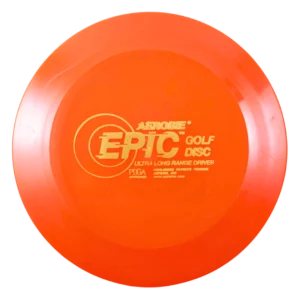
Choosing the best disc golf discs for each individual shot type will elevate your performance, reduce your round scores, and make disc golf even more enjoyable. I have tested more different disc golf discs than anyone, have tried nearly every single disc golf brand, and the list below is my recommendations for each disc and flight type. In essence, the discs below are the ones that would make my tournament bag today.
In disc golf, a discs flight ratings and stability will vary based on your arm speed, altitude, throwing style, and skill set. Individual discs flight also varies based on plastic type, wear and weight. Because of the way I throw, I have developed certain preferences for my throwing style.
In terms of skill level, I am an “average” experienced player. I’ve been playing disc golf almost daily for nearly a decade. I don’t get extreme distance like the pros, but throw much farther than beginners. For putt and approach discs, I generally throw for up to about 220 feet. I throw midrange discs in the 200-260 distance range and fairway drivers for shots between 260 and 340 feet. Max distance drivers usually come out of the bag for throws more than 310 feet when I have a wide open fairway where it’s okay for the disc to fade and drift a significant distance. Occasionally, I am able to throw a distance driver more than 400 feet, but that’s only when the conditions are just right and I get my timing and release angles perfect. Most of the time I consider a 350 foot drive a good one.
If you are a beginner, and the distances I list above seem “really far” you may want to consider my recommendations on best discs for beginners and best starter sets before selecting the discs listed below.
Best Discs Comparison Table
| Product Name | Flight Ratings | Best For | Level Of Player |
| Viking Discs Rune | Speed: 2 Glide: 4 Turn: 0 Fade: 0 |
Confident Putting | Beginner, Intermediate, and Advanced |
| Infinite Discs Tomb | Speed: 3 Glide: 4 Turn: 0 Fade: 1 |
Straight approach shots and short drives | Beginner, Intermediate, and Advanced |
| Prodiscus Jokeri | Speed: 3 Glide: 3 Turn: 0 Fade: 1 |
Overstable approach shots | Beginner, Intermediate, and Advanced |
| Yikun Tomahawk | Speed: 5 Glide: 4 Turn: -3 Fade: 0 |
Straight flight that finishes straight without fade; anhzyer finishes | Beginner and Intermediate |
| Prodigy Ace Line M-Model S | Speed: 5 Glide: 4 Turn: 0 Fade: 1 |
Hyzer shots and Anhyzer flex shots; longer range approaches and upshots to the basket | Beginner, Intermediate and Advanced |
| Dynamic Discs Justice | Speed: 4 Glide: 2 Turn: 0 Fade: 4 |
Forehand approach shots, flex throws & spike hyzers | Beginner, Intermediate and Advanced |
| Infinite Discs Sphinx | Speed: 9 Glide: 5 Turn: -3 Fade: 1 |
Hyzer Flip striaight throws, Tailwind and downhill drives; long range Turnover shots and rollers | Beginner and Intermediate |
| Innova TeeBird | Speed: 7 Glide: 5 Turn: 0 Fade: 2 |
Consistent straight flight with fading finish. | Intermediate and Advanced |
| MVP Tesla | Speed: 9 Glide: 4 Turn: -.5 Fade: 2 |
Sidearm throws, flick shots, windy conditions, precision control. | Intermediate and Advanced |
| Infinite Discs Pharaoh | Speed:13 Glide: 6 Turn: -1 Fade: 2 |
Maximum Distance | Intermediate and Advanced |
Best Disc Golf Discs Reviews
Putter Discs
1. Best Putting Putter: Viking Discs Rune


The first reason the Rune is so great is the feel of the plastic. Vikings ground plastic blend feels amazing. It’s super grippy and durable. It’s very comparable to the premium blend putter plastic blends made by Dynamic Discs and Latitude 64 but at at a far less expensive price. Value and quality combined make this putter my number one recommendation.
The second reason I like the Rune is simply the shape of the disc. I like putters with a relatively flat top. If the putter has too much dome, like an Innova Aviar, then I tend to turn my putts over and miss to the right, especially on long putts.
For disc golf putters a bead is a “bump” at the bottom of the rim. The Rune has a very large bead that just feels perfect. Good feel equals putting confidence. In addition to the feel the bead gives, it also helps this putter to have more stability off the tee. You can crank the Rune hard and it will not turn over with a level release.
The Viking Discs Rune is a versatile disc that also works as a driving putter. I primarily use the Rune for just putting, but it is also an adequate throwing or approach putter. If you don’t want to carry multiple putters, the Rune is a solid all purpose putt and approach disc that works well for both spin and push putts.
PROS
- Great for putt and approach
- Dependable for all types of conditions
- Versatile putter
- Straight flier and predictable finish
- Thick bead for maximum confidence
- PDGA Approved
- Recommended for players of any skill or level
CONS
- Some players prefer a beadless putter
- Disc does not fly as straight as the flight numbers indicate
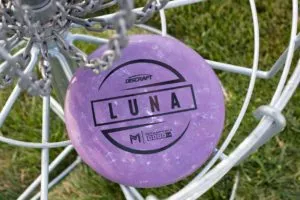
Honorable mention best disc golf putters to consider include the Dynamic Discs Judge, Infinite Discs Myth, Prodiscus Sparta, and Discraft Luna.
2. Best Approach Disc/Driving Putter: Infinite Discs Tomb


I use the Tomb for most shots less than about 220 feet in distance. In a lot of ways, it has minimized the amount of times I use midrange discs as I can get almost as much distance out of the Tomb as I do a traditional mid. In addition to using it for straight line drive drives, I also love using the Tomb for gradual fading hyzer shots. This great disc holds just about any line you put in it and works excellent when you need a far fading left shot by releasing it at a slight hyzer angle.
I throw the Tomb in two different plastics. I prefer the base D-Blend plastic for my backhand throws and S-Blend for forehand. The D-blend has a straighter end of flight finish but is a little less stable at high speeds.
While the Tomb is ideal as an approach disc, it is too thin for me to be used as a primary putter. I occasionally use it for long putts, but feel more confident with a deeper rim putter for my normal push putting stance.
PROS
- Ideal for approach shots
- Has a smooth modern feel for better grip and control
- Capable of holding a straight flight for power throwers
- Can work as a reliable approach disc for both backhand and forehand throws
- PDGA Approved
CONS
- Thinner than I like for actual putting
Honorable mention best approach discs to consider include Innova Colt, Innova Nova, Prodigy A4, Discraft Banger GT and Axiom Envy.
3. Best Overstable Approach Disc: Prodiscus Jokeri

For those approach shots where you just want to crank it hard and know that it won’t turn over and will always finish left, I recommend the Prodiscus Jokeri. Prodiscus is a manufacturer of premium plastic golf discs out of Finland. While they are not a well known brand, the one disc that most serious disc golfers know about in their line is the Jokeri.
Like the Tomb, the Jokeri has a completely flat top. This putt and approach disc has a deeper rim than the tomb and is substantially more overstable. Unless you have the power of professional disc golfer Kevin Jones, you aren’t going to turn over the Jokeri. Speaking of Kevin, the Jokeri, this is a disc that he threw for almost every shot less than 400 feet when he was sponsored by Prodiscus.
The Jokeri is excellent for both backhand and forehand approach shots. It provides an ultra consistent release and has a beautiful fading finish. As overstable as the Jokeri is, I don’t recommend it for putting unless you are playing in very high winds. This is an ultra quality disc from a lesser known disc golf brand. I recommend the Jokeri in either Ultrium or Premium plastic blends. It is also available in a Base plastic which is not very durable. As a primarily driving putter, you’re going to want to pay a few more bucks to get it in one of the ultra durable plastic blends.
PROS
- Delivers a stable and flight with a reliable fade
- Great for long approach shots, windy conditions, power drives
- Renders comfortable feel that makes it good for forehand and backhand throws
- Ideal to use to drive off the tee or wooded upshots
- PDGA Approved
CONS
- Too overstable for putting. May fade early minimizing accuracy.
- In the base plastic it is not very durable.
Honorable mention best overstable approach discs include the Discraft Zone, Westside Harp, Innova Pig, and DGA Breaker.
Mid-Range Discs
4. Best Understable Midrange Disc: Yikun Tomahawk
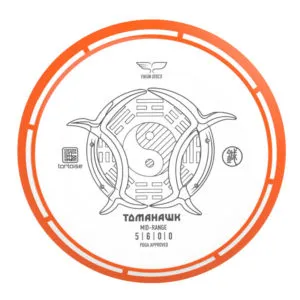
Until I discovered the Yikun Tomahawk, I thought that all midrange golf discs faded at the end of the flight, even when listed with a 0 fade rating. With its unique shell overmold technology, the Tomahawk defies disc golf flight norms and finishes straight. This is the only non putter I have found that has a flight path similar to an Ultra-Star Ultimate Frisbee. Not only does the Tomahawk have a unique flight, it also has a unique feel. The outer rim of the Tomahawk is soft and grippy while the inner flight plate feels like the plastic used for Ultimate Frisbees.
If you are a finesse thrower you aren’t going to find another disc as straight flying as the Yikun Tomahawk. Release it at a hyzer angle and watch it flip to flat and then fly straight for several hundred feet. Are forehand shots difficult for you? Try throwing a Tomahawk at a high anhyzer angle and watch it gradually drift to the right all the way to the end of the flight. This is a disc that is not going to deviate from an anhyzer release angle.
The flight ratings of the Tomahawk give this disc a rating of 5/4/0/0. While the last number indicating a lack of end of flight fade is true, the third number is not. The third number in the four digit disc golf flight ratings signifies high speed turn. A zero turn rating means that this disc should not flip up, but the Tomahawk is actually really flippy, especially as it gets beat in. Experienced players used to throwing midrange discs hard will get frustrated with the Tomahawk as it is too flippy. At low powers the Tomahawk is a fun disc to flick, but this is not a good forehand disc otherwise.
I always recommend the Tomahawk to my friends beginning disc golf who play Ultimate Frisbee. For Ultimate players this disc has a familiar flight path for both backhand and forehand throws. If you are tired of golf discs always fading on you when you want them to just finish straight, you need to try the Yikun Tomahawk.
PROS
- Great for shots that need to finish straight
- Has an excellent grip for better control and easy throwing
- Flies straight when thrown with low power
- Holds an anhyzer line to the end
- Great for new players and children
- Fantastic choice for Ultimate Frisbee players trying disc golf
- PDGA Approved
CONS
- Not for power players
- Too understable when thrown with power
Honorable mention best understable midrange discs include the DGA Tremor, Dynamic Discs Patrol, Discraft Archer and Westside Tursas.
5. Best Stable Midrange: Prodigy Ace Line M Model S


Check Price on Amazon Shop at Infinite Discs
If you’re looking for a low priced do-it-all midrange, look no farther than the Prodigy M Model S. While there are dozens of different stable flying midrange discs on the market, the thing that separates the M Model S from the competition is its price. This, and all other Ace Line discs are priced a few dollars below comparable plastics manufactured by other disc brands.
Prodigy Ace Line has two different plastic blends. The Duraflex is a pretty typical TPU disc golf plastic that has adequate grip and durability. The base grip plastic is a mid grade plastic that is available at a base plastic price. While I don’t normally recommend base plastics for anything other than putters, the Ace Line base grip plastic is in a class of its own. It feels great and is plenty durable to last you numerous rounds of disc golf.
What I like about this M Model S midrange golf disc is how versatile it is. It can hold just about any the angle of release on throws. Throw it level with power and it flies dead straight and stable. Based on the angle you throw it, this disc can be used for almost any midrange situation; it can perform almost any shot you need it to.
When it comes to the grip, the M Model S has an excellent feel. So much of accuracy is getting the disc release correct and this is easy to do with all of the Ace Line M Model Discs.
One thing that the M Model S doesn’t quite have right is the flight numbers. Prodigy gives it a speed rating of 6, glide of 4, turn of 0, and fade of 3. This disc is really just a straight stable flyer and I give it flight ratings 5/4/0/1.
I believe it is much easier to play and give the disc a throw when it feels great out of hand, and M Model S does not disappoint. If you need better control and accuracy and want the best possible price, this golf disc is an excellent midrange option.
PROS
- Great for medium length drives off the tee
- Can be used for Hyzer shots and Anhyzer shots
- Has great grip for better accuracy and control
- Low price. Best value midrange.
- Flies very straight
- PDGA Approved
CONS
- Flight numbers printed on the disc are not accurate.
Honorable mention best stable midrange discs include the Discraft Buzzz, Dynamic Discs Truth, Innova Mako3,
6. Best Very Overstable Mid-Range: Dynamic Discs Justice


Check Price on Amazon Shop at Infinite Discs
While considered a mid-range, the Dynamic Discs Justice is really more of a utility disc. It is so overstable you can count on it to always finish the flight by spiking to the ground. This is one of the most important discs in my bag. While there are now several different super overstable midrange discs, the DD Justice was the original. This is a small diameter midrange with a perfectly flat top.
I absolutely love using the Justice for forehand approach shots. Previously I used the Discraft Buzzz OS, but do to the flaws in my form, I often turned the Buzzz OS over and drifted far left of my intended target. Because the justice is SO overstable, that’s just about impossible. Even if you turn your wrist too far and release it at an anhyzer angle, the Justice will still fight back in an overstable flight path. This disc literally shaved strokes off of my game by improving my forehand approach shot accuracy.
The Justice is also really fun to use on short S-curve flex shots. If you need to get around one object and then switch directions the other way around, try releasing the Justice at an anhyzer angle. It will always fade back.
One of the best things about the Justice is that it will not go too far. Have a target 200 feet away that you don’t want to overthrow? Simply throw the Justice at a hyzer angle at normal control power and it will spike to the ground right under the basket. With as overstable as the Justice is, it really doesn’t drift at far lengths because it literally turns near verticle and spikes to the ground. At the angle it hits the ground, it also rarely skips and only occasionally rolls.
If you’re looking for the most consistent disc in disc golf, consider the Dynamic Discs Justice.
PROS
- Most consistent midrange on the market
- Great for forehand approach shots
- Excellent for S curve flex shots
- Best for spike hyzers you want to stay near the basket
- PDGA Approved
CONS
- Not designed for distance
- Not recommended for beginners
Honorable mention best super overstable midrange discs include the Westside Anvil, Viking Loki and MVP Deflector.
Driver Discs
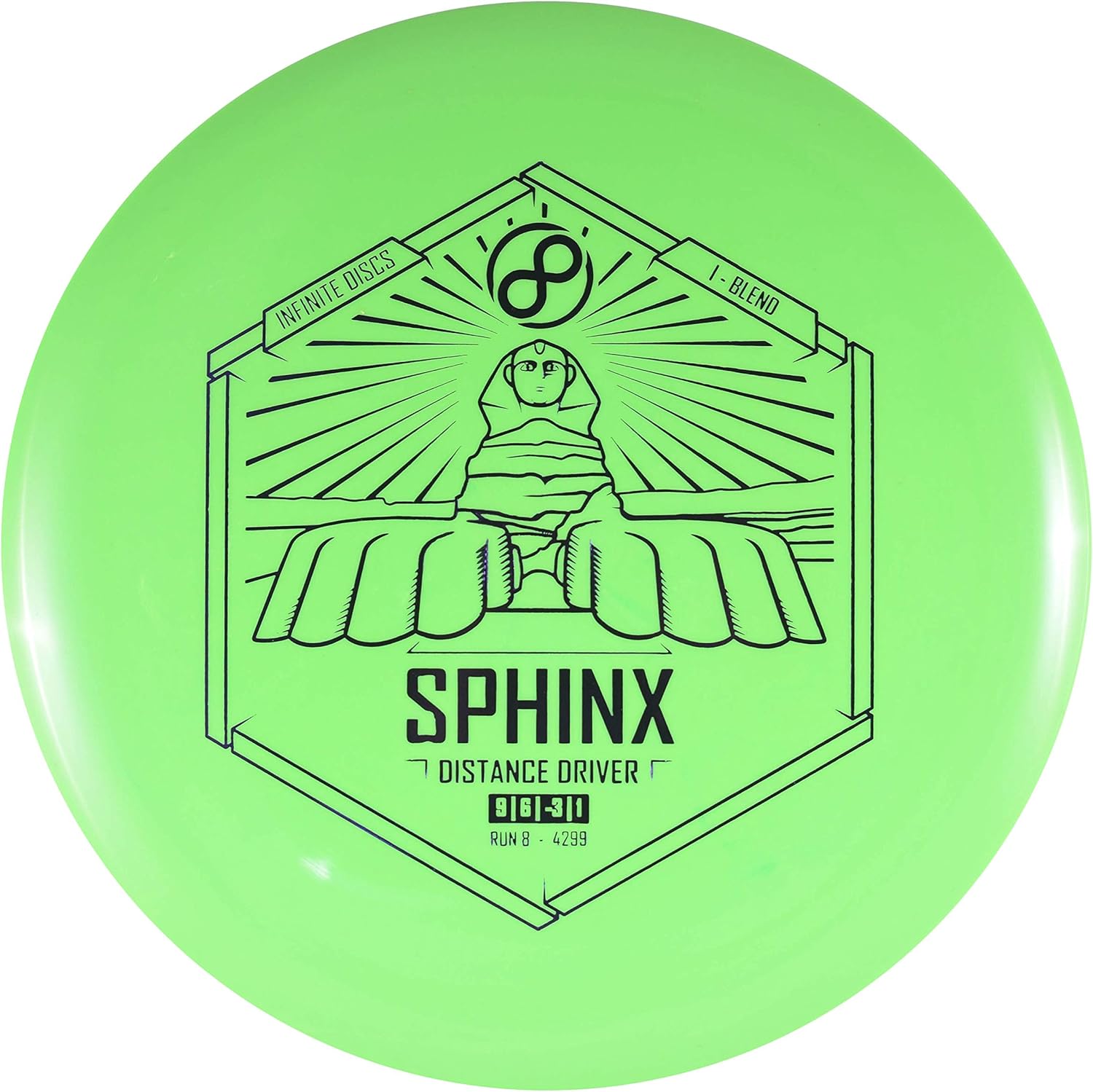
7. Best Understable Driver: Infinite Discs Sphinx
Check Price on Amazon Shop at Infinite Discs
The I-Blend Infinite Discs Sphinx offers the perfect combination of affordability, stability, feel, speed, and control for most disc golfers.
This is an understable driver. In light weights this is a great first driver for beginners. It is easy to throw and will provide maximum distance for newbies. Experienced players will love using the Sphinx for straight driving hyzer flip shots, turnover throws, and even rollers.
The flight path of the Sphinx varies based on the different plastic it is in. My personal favorite is I-Blend. Not only is the I-Blend plastic the most affordable, but it has an amazing grippy feel and is still very durable–much more durable than the base plastic junk that comes in most starter sets.
One of the nice things about the Sphinx, and all discs that Infinite manufacturers, is that each run number is listed on the disc. If you have a different stamp, you likely have a different disc run as they change the stamp design each time. With disc golf manufacturing, each unique run has a slightly different dome and plastic feel which alter the flight characteristics. Knowing the run number is very valuable when you find a disc that you absolutely love.
If you’re looking for an easy to throw driver with a relatively straight flight and incredible glide, consider the Infinite Discs Sphinx.
PROS
- Great to use as the first distance driver
- Recommended for beginners and intermediate players
- Keeps on a straight flight
- Excels in tailwind and downhill drives
- Easy to manipulate with hyzer and anhyzer shots
- Unique run numbers listed on each disc
CONS
- Different plastic types have different flights
Honorable mention understable drivers include the Discraft Heat, Westside Hatchet, Infinite Discs Sphinx, Dynamic Discs Witness, TSA Mantra and Yikun Hu.
8. Best Stable Fairway Driver: Innova Teebird


Check Price on Amazon Shop at Infinite Discs
When it comes to the gold standard of stable consistency, nothing beats the Innova TeeBird. The TeeBird has been one of the most popular fairway drivers for the last twenty years. This is a disc that holds a bag spots that everyone needs. On nearly every disc golf course you’re going to have a shot that needs to go straight and then finish with a consistent fade.
The TeeBird is a relatively easy to throw thin rimmed fairway driver. The TeeBird is available in a variety of different Innova Plastics. My favorite plastic blend for this disc is star plastic.
The TeeBird has an uncanny ability to stay straight without turning over. This sweet spot of stability makes it an excellent choice for both backhand and forehand throws. It is the epitome of consistency. The TeeBird is likely not going to be your farthest flying disc but it will surely be one of the most consistent. This disc performs well in all weather conditions and is an excellent choice if you’re looking for an all purpose driver.
When you need a fairway driver that is going to be consistent and reliable, consider the Innova TeeBird or the more modern remake version the TeeBird3.
PROS
- Stable flight with consistent fade
- Highly resistent to turnover
- Good for both backhand and forehand throws
- Available in a variety of different plastics
- PDGA Approved
CONS
- Not designed to provide maximum distance
Honorable mention stable fairway drivers include the Discraft Undertaker, Infinite Discs Exodus, Westside Stag, Latitude 64 Explorer, Legacy Rival, and MVP Volt.
9. Best Forehand Driver: MVP Tesla
Check Price on Amazon Shop at Infinite Discs


My favorite driver for controlled forehand shots is the MVP Tesla. The reason I love the Tesla so much is because it has a moderately thick 18.5cm rim and a completely flat top. The feel of this disc allows for the most consistent forehand releases for me. Personally, I struggle flicking any golf discs with significant domes. When a driver has a dome I tend to release it at an anhyzer angle which loses accuracy and often forces the disc to turnover. The flat top of the MVP Tesla solves this issue for me.
In terms of stability, the Tesla is overstable, but not so overstable that you can’t get a decent amount of distance. I’m able to throw the Tesla Forehand about 300 feet of consistent distance. When thrown hard enough, the Tesla will exhibit a slight degree of high speed turn before always fading back. MVP discs utilize what they call “Gyro Technology” in their discs. The black outer rims of MVP discs have more weight than the inner flight plate creating a gyroscopic effect when the disc is spinning. I think this gyro technology helps the disc to stay straight for longer before the end of flight low speed fade.
The Tesla is my choice for forehand control shots where I need to hit a narrow gap in a selection of wooded trees. If I need a little extra distance, I release the Tesla at a slight anhyzer angle where I’m able to get a little extra distance using the S-Curve effect.
For my normal backhand throw the Tesla is too overstable for me to get much distance out of, but having it being in the bag comes in really handy for extra windy days. The overstability and thin profile of the Tesla allow this disc to handle headwinds very will.
If you’re looking for more control in your forehand flick shots without sacrificing distance, consider the MVP Tesla.
PROS
- Perfect profile for consistent forehand throws
- Ideal for advanced players and power throwers
- Can resist headwind
- Holds a straight line for good distance and consistent throws in the woods
- Gyro technology helps you get good distance
- PDGA Approved
CONS
- Not recommended for beginners
Honorable mention best forehand control drivers include the Discraft Flick, Infinite Discs Scepter, Innova Firebird, Axiom Wrath, and the Westside Longbowman.
10. Best Driver for Maximum Distance: Infinite Discs Pharaoh


Check Price on Amazon Shop at Infinite Discs
There are only two discs that I have ever been able to throw for more than 400 feet. The first was the now out of production Vibram unLace, the second is a 159 gram Infinite Discs I-Blend Pharaoh.
One of the unique things about the Pharaoh is that I use this disc for max distance for both backhand and forehand throws. For my backhand big distance throws, I use a light weight Pharaoh in affordable I-Blend plastic. For sidearm throws, I choose a max weight Pharaoh in in Swirly S-Blend plastic. The disc is slightly flatter and more overstable in Swirly S-Blend plastic than the I-Blend which makes this disc perfect for my max distance forehand throws.
While I can occasionally throw the light weight Pharaoh for more than 400 feet, in the light weights, this disc does not handle very well in head winds. I actually bag five different Pharaohs of different weights to use based on the differing wind conditions or how much turn and fade I need on a particular shot.
While the Tesla is a more consistent flying forehand driver for me, I can generally get about 30-50 feet more distance with the Pharaoh on flick shots. When it’s a wide open field without dangers of obstacles and OB, the Pharaoh is almost always the disc I’m reaching pulling out of my bag for max distance.
If you’re looking for more disc golf distance consider the Pharaoh regardless of your preferred throwing style.
PROS
- Available in a variety of plastics and weights
- Best for backhand distance in I-Blend plastic
- Best for forehand distance in Swirly S plastic
- Stylish disc stamps
- PDGA Approved
CONS
- Not the best for max distance for beginners
Honorable mention max distance drivers include the Discraft Thrasher, Westside Destiny, Viking Discs Ragnarok, Innova Tern, Westside King.
How to Choose the Best Disc Golf Disc

You may opt for any golf disc of your choice. You might already have a few options of colors and types of discs in your mind but with the overwhelming options on the market, how can you choose the ideal golf disc for your skills, techniques, and game preferences?
Choosing the best golf disc is primarily based on three factors: the level or experience of the player, weight, and plastic type.
Player Level / Skill / Experience
It is imperative to closely consider your your skill level, and frisbee experience to be able to determine which golf disc suit you best. There are different types of golf discs with different speeds and stability designed for players of different skill levels. Therefore, there are golf discs that are ideal for beginners or amateurs, intermediate players, and advanced players.
Best Discs for Beginners
If you are a beginner and you are just trying out a few techniques throws or your arm is not strong enough, you might want to go for golf discs that are much easier to control and may require only lower speed such as a putter and mid-range disc.
For beginners that don’t usually have enough power or strong arm to set off a speed, I recommend a disc with a Speed rating lower than 10. You should stay away from high speed drivers unless they are light weight or very understable.
Another thing to consider if you are a beginner is to look for a disc that is more understable. This means that the disc is much easier to throw and will likely fly straight longer before fading off to the left. If you are a first-timer and plan to play your first round of disc golf with just a single disc, consider using a putter or understable midrange.
For more information on the best discs for beginners, read this article.
Best Disc Golf Discs for Intermediate Players
Most disc golfers feel they belong in the intermediate category. However, the PDGA definition of Intermediate players defines an Intermediate player as:
Developing players who have played 2-3 years with improved consistency and accuracy. Throw 250-350 feet, make 5-7/10 putts from 20 feet.
Despite their best efforts, many disc golfers are never able to achieve a rating of at least 900 as recommended to play in Intermediate divisions at disc golf tournaments. Thus, the skill level of so called “Intermediate” players can greatly vary. For our recommendations, we will consider an intermediate player as one who has played disc golf for several months and can throw between 250 and 350 feet of total distance.
Intermediate players generally have enough skill that they can throw discs of all speed and stability. For maximum distance, intermediate players should select discs of the right speed and stability.
More Distance – Best Distance Drivers for Intermediate players
The farthest flying drivers for intermediate players are typically drivers in the 10-12 speed range with a significant amount of high speed turn. The turn rating intermediate players should choose should be between -1 and -4. Sometimes intermediate players can handle faster speed discs, and get more distance with them, if the drivers are in lighter weight ranges.
To achieve maximum distance, an intermediate disc golfer will want to get a disc with a full S-Curve fight path. With a right handed backhand throw this means that the disc will drift to the right at high speeds, fighting against the natural pull as it slows down and then slowly fade to the left at the end of the flight.
Many disc golfers feel that they need to throw “max weight” discs. While max weight may give you more control, especially in windy conditions, you will be able to obtain more distance with lightweight discs. For me, the optimal disc speed for distance drivers for me is in the low 160’s range. When wind conditions are light, or when there is a slight tailwind, I’ll even pull out a 149 gram speed 13 driver at times. Nobody will make fun of your manliness for throwing light discs when you out drive them by fifty feet.
Discs also get more throwable and understable as they wear and get “beat in.” As a disc takes abuse, it tends to become more understable and thus more useable for the intermediate disc golfer.
While maximum distance can be achieved best with S-Curve flight paths, relying on the understableness of a disc is not usually the most accurate, especially in windy conditions.
Best Discs for Advanced Players and Professionals
Advanced players and professionals have driving figured out. They are able to throw for more than 400 feet with some being able to achieve close to 600 feet of total distance.
Because advanced players have significantly more throwing speed than intermediate players or beginners, they need to throw discs with more overstability.
The most accurate throw in disc golf is the hyzer shot. This is a throw that does not S-Curve but is released at an angle where the outside edge dips down and simply curves in one direction. Advanced players do not need to rely on the full disc flight to get the necessary distance to birdie most holes and so get more accuracy by throwing more overstable disc golf discs.
Most of the drivers made by big disc golf brands like Discraft and Innova are tailered towards their professional player ambassadors. Amateur players think that if they have the discs the pros play with that they will be able to throw like the pros. Sadly, this is not usually the case and Intermediate players should use the discs that are designed for their skill set.
The Importance of Disc Weight
Another significant factor that affects how a particular disc will fly is the disc weight.
Personally, I did find a difficult time choosing which disc weight is suitable for me. Take note that these golf discs are available in a wide range of weight. You will find light to heavy golf discs and each weight will carry out a variable performance based on the wind condition and your arm speed or power.
In general, lighter discs are a lot easier to throw and would usually go farther or reach longer distance. Typically, they have more glide but since they are lightweight, they can easily be affected by wind. They tend to flip over. Heavier discs, on the other hand, are more accurate and will likely be less affected by wind but demand higher speed and power. They also tend to fly more overstable.
After playing disc golf for years, I have learned a lot about disc golf weight. Here are some of my important points and advice regarding this:
When it comes to putter and midrange discs, I recommend using heavier golf discs. With their weight, they will be less affected by the wind, will fly more stable, and will also likely sink further into the chain. Putter and midrange discs are used for short distance throws. Therefore, you can easily control heavy discs no matter how strong or powerful your arm is. I recommend using lighter discs if you want to go for understable flights while heavier discs for overstable flights.
Driver discs, on the other hand, are designed to reach longer or farther distances. You can choose the weight based on your personal preference. However, it is important to consider your arm power or speed and skill level when choosing the weight.
If you need a disc that is more reliable in the wind, you may choose a golf disc that weighs 175 grams or more. Take note that you need enough power to throw it to make sure the disc follows and remains in its flight path. On the other hand, if you want something that you can toss more lightly and control a little more, you should get a golf disc with a weight of 165 to 170 grams.
Just remember that when you start to overpower your favorite disc, you can consider shifting to the heavier version of that same disc you are using and hence, keep the disc from turning over quite as easily.
To make it a lot easier for you to understand when to use a light and heavy disc, refer to the quick overview below on when to use light golf discs and heavy golf discs.
When to use Light Golf Discs
- When you need to go through a tailwind and you need to make the disc float
- During a cold weather
- If you wish to go for a softer landing
- As a beginner
- You want to increase distance
When to use Heavy Golf Discs
- If you start to overpower your favorite disc, go for the heavier version of that same disc
- For headwind shots
- When you prefer better stability for the same disc
- During hot weather or warm temperatures
- During very windy situations
- When you are going to throw a skip shot
- When you need to focus on consistency rather than distance
Finding the Best Disc Golf Plastic for You
Choosing the plastic type of golf disc is crucial. Each has its own characteristics that can affect the grip, flexibility, durability, consistency, and reliability of the flights. Golf discs may all look the same but take note that there are no general classifications for the plastic type. Each golf disc brand uses a patented technology to produce durable discs.
For example, Innova houses a wide range of golf discs in their base level DX line. These golf discs are designed to deliver exceptional grip to withstand different types of weather conditions. They also fall in an affordable pricing point but are not very durable. Realize that you can buy the same Innova disc mold in both low and high quality plastics.
MVP Disc Sports, on the other hand, utilizes their patented technologies to produce ultra lightweight golf discs without compromising the durability, flexibility, and stability. Like the MVP Disc Sports Fission Photon Distance Driver on our list of top reviews, it is crafted with Fission microbubble technology, a type of plastic that renders evenly distributed and imperceptible weight reduction microbubbles. It offers a light throwing weight, but with substantial feel.
Putters such as the Axiom Discs Neutron Envy manufactured golf discs using the Overmold GYRO technology, an ultra dense plastic blend and chemically bonded plastic that exhibits lighter inner rim. It allows the bulky mass to be shifted outward and therefore, provides unprecedented focus at the outer rim. Such plastic type provides a soft feel and a nice tacky grip and also delivers a solid flight with consistent fade and good glide.
If you are a beginner, you might want to invest in premium plastics, particularly if you are trying out your throws in a field with a lot of obstacles like trees. The disc will likely hit these trees which can cause dents or chips if the plastic is a low-end type, unless it is a premium plastic disc.
Carefully considering the plastic type also helps you decide which golf disc is ideal for certain weather conditions.
Different Types of Discs
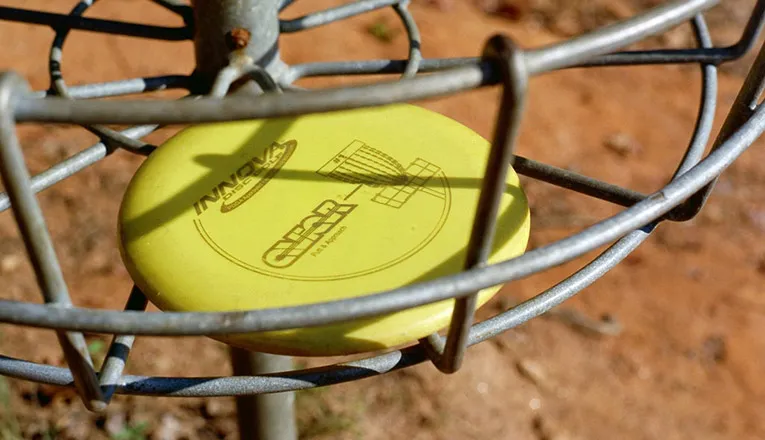
There are different types of discs for different types of shots. Driver, Midrange, and Putter discs are the primary categories. But there are discs that can go the farthest distance while other discs are only recommended to use when you are close to the basket. And to help you identify which golf disc to use, you can refer to the detailed definitions below.
Distance Drivers
As the name suggests, a distance driver is something you should probably go for if you want to achieve the maximum distance. It can reach an average distance of approximately 350 feet or much farther than that. They showcase sharper noses and wider rims that can render the utmost capacity to travel the greatest or most significant distance.
Furthermore, distance drivers should be thrown at high speed along with the right technique to make sure you achieve the intended flight path. That is why these drivers are ideal for advanced and may not be the best option for beginners.
Fairway Drivers
Fairway Drivers are all about superior control and enhanced accuracy. Designed with smaller rims, It can achieve a distance around 290 feet to 350 feet..
Compared to Distance Drivers, they have lower distance potential, but Fairway Drivers are much easier to control. If you want to go through tight lines or throw your disc for shorter drives and straight flights, Fairway Drivers can keep up with your game. Amateurs and advanced disc golf players can use these drivers.
Mid ranges
Mid-ranges have blended and slightly sharp edges that can cut through the air for a faster and more stable flight. They won’t fly as far, but it can reach a target distance around 225 feet. These discs tend to fly straighter than most drivers and can cover longer range than putters.
Mid-range discs keep a steady flight and, therefore, could be an ideal option for all player levels – from beginners to advance. Even when you go for a backhand throw, a midrange disc may turn left as it slows down, but it can hold a straight line much longer.
Putters
Putters are the slowest discs among the three categories of discs.
They have the widest and roundest edge, which reduces their speed potential. Putters won’t go as far as the drivers, but they tend to fly straight even when they are not thrown hard, although they can have a predictable flight. Therefore, a player would usually use a putter for final shot to take disc into the basket, or use it to approach the basket in a short distance.
A putter disc is essential for all players and also the easiest disc to control. If you are new to this game, this is the first disc that you need to buy for sure.
Flight Rating System
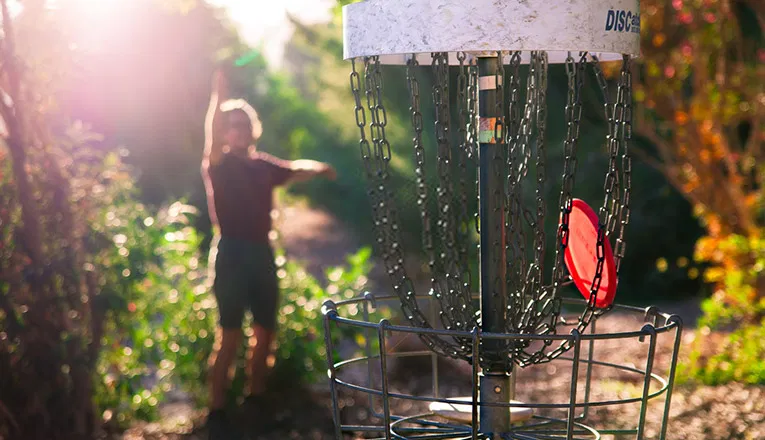
Okay, this part is where I got so confused about when I was just starting out with disc golfing. For a beginner, you’ve probably wondered what those numbers on a golf disc actually mean like what I did.
Are these brand tags or manufacturing deets? Well, no.
These flight ratings are the numbers on a disc that define the speed, glide, turn, and fade. These are the characteristics of the discs that make them unique. Besides that, the ratings can also help the player to identify the intended flight of the discs.
You should also take note that every golf disc brand has their own flight rating system and therefore, the indicated numbers below are based on the average ratings.
Speed – Rating: 1 to 14
The listed speed number is associated with the minimum speed and power at how you should throw the disc and let it fly in its intended flight design or achieve proper flight ratings. Speed also defines its capacity to travel through the air, which significantly depends on how powerful or fast you throw the disc.
If the number is higher, you have to throw the disc a lot faster. For a golf disc with a speed rating of 13, it may not reach its maximum distance potential and proper spin if you don’t comply with the required arm speed and revolutions.
Speed also categorizes different types of discs and hence, allows you to determine which golf disc fits your ability or level, power, and throwing techniques. Golf discs that fall in the speed range of 1 to 3 are putters while mid-range discs could be between 4 and 5. Drivers, on the other hand, are divided into two categories: fairway drivers and distance drivers. Fairway drivers may have a speed rating from 6 to 8, while distance drivers are from 9 to 13.
Some companies, however, added 14 as the maximum speed rating, whereas some discs with this speed rating are similar to those discs from other brands with a speed rating of 13. Besides the speed rating, you may also consider checking other significant features of the golf disc such as the width of the rim to identify the differences of the discs between brands.
Glide – Rating: 1 to 7
Glide is the ability of the disc to remain in the air or the total amount of the float the golf disc has. It is rated between 1 to 7, although most of the golf discs may fall in the glide rating range from 4 to 6. Those discs that have lower glide ratings are usually overstable or tend to fade off fairly quickly, however, ideal to use for approaches as they can go near the basket.
On the other hand, discs with higher glide ratings perform otherwise; they remain airborne for a longer time and therefore, ideal for longer shots or if you are targeting the maximum distance. Disc golfs with higher glide ratings are also suitable for beginners.
Turn – Rating: -5 to +1
Turn highlights the movement of the golf disc on how it moves or leans to the right during its initial flight. The turn of the disc is rated between -5 to 1 whereas the negative numbers or ratings pertain to the movement of the disc that turns right easily or becomes understable.
When the value of the negative number is much higher, the disc will likely turn over. Therefore, a golf disc with -5 rating will turn over to the right a lot more than a golf disc with -3 rating.
If the turn rating is positive or +1, it will go left immediately or become overstable while 0 describes the direction of the disc that would stay on a straight path and therefore, would resist turning right during the early portion of its flight.
In terms of accurate flight in the wind, golf discs with less turn render great flight while discs with (positive) higher turn rating work great with new players as they are much easier to throw. And although golf discs have specified turn ratings, turn or also known as
High Speed Stability, greatly depends on how you throw the disc. If you are left-handed and you throw with your backhand (LHBH) or you are right-handed and you throw with forehand (RHFH), the turn will usually go right while LHFH or RHBH will go left.
Fade – Rating: 0 to 5
While turn refers to how much the disc turns right, fade is how the disc curves on the left as it reaches the terminal part of its flight or how the disc flies or performs at lower speeds as it heads to the end of its flight. However, fade also depends on how you throw the disc. It also defines how the disc reverts back at the end of its flight.
The fade rating ranges from 0 to 5. If the fade rating is much higher, the golf disc is very likely to be overstable or to bear left and reach the ground on a steeper direction. The disc will probably remain in a straight flight if it has a 0 fade and 0 turn while a disc with 2 fade and -2 turn may curve back in an “S” shape flight.
How to Read Flight Rating System
So, how do these flight rating system or flight numbers work? To give you an idea, take a look at the following examples:
Let’s say that an Aviar disc has a rating of 2/3/0/1 (Speed: 2 Glide: 3 Turn: 0 Fade: 1:
this means that this disc will be relatively easy to throw at a 2 speed or at a slower arm speed. With a glide rating of 3, it can render a good glide or remain airborne a bit longer. And based on its rating of 0 Turn and 1 Fade, this disc can fly straight and will likely go left as it reaches toward the end of its flight.
Another example is a Roc disc that has a flight rating of 4/4/0/3 (Speed: 4 Glide: 4 Turn: 0 Fade: 3).
You might notice a significant increase in speed compared to an Aviar disc. At a 4 speed, this means that this disc requires stronger arm power than an Aviar to get to the intended speed, although it is still fairly easy. With its higher speed and glide, it can fly a little farther. According to the 0 Turn and 3 Fade, this Roc disc can fly fairly straight before it inclines harder on the left as it finishes.
Disc Golf Stability
Based on the flight numbers, a golf disc has a tendency to fly in different directions and remain in a designated path, whether it is straight or it turns to the right or turns to the left. The description or characteristics of the flight path of a golf disc is referred to as stability.
The stability of a golf disc, however, may vary from one brand to another. Each manufacturer has its respective ratings or properties that define the stability of a disc.
Stable Discs
Stable golf discs are designed to fly straight or likely to remain in a straight flight path. Golf discs with 0 rating, 0 turn and 0 fade, for example, tend to fly straight. Whether they are drivers, midrange discs, or putters, a golf disc of any of these types can be identified as a stable disc depending on the combination of their flight ratings, structure, and design.
Overstable discs
Overstable discs, on the other hand, are golf discs that will curve to the left when thrown with right hand and backhand (RHBH). When you throw an overstable disc with a medium amount of speed, it will fade off to the left fairly quickly unless they are thrown very hard.
Understable discs
Understable discs refer to the flight of the golf discs that will curve to the right or are designed to turn over to the right instead of the left, particularly with the RHBH throw. The disc will very likely turn the faster it is thrown and hence, an understable golf disc will curve to the right or turnover against the wind.
Types of Disc Golf Throws
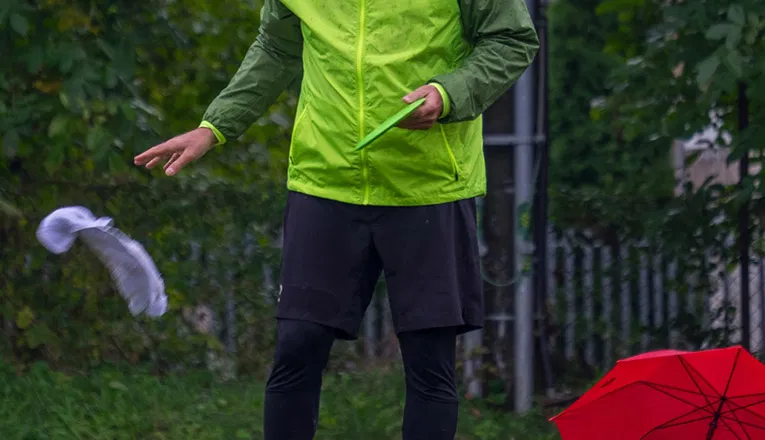
There are different types of disc golf throws that you can try to elevate your precision and successfully aim at your target. Identifying these types of disc golf throws will also help you in which technique or movement best applies to your skill or experience.
The Backhand Throw
The backhand throw is the most common and popular throw in disc golf. It is a technique or style of throw where you throw the disc with your arm across the front of your body, then you release it toward a forward target. It is also the type of throw that you can use if you are aiming for greater distance without exerting a lot of effort.
Do know that a backhand throw is a coordination of the body, hips, shoulders, and feet to build up the energy and movement and execute the throw successfully. As this is a popular type of throw in disc golf, many manufacturers usually base their flight numbers or rating system and feasible results on a backhand throw.
Forehand (Side Arm)
Also referred to as side arm, the forehand throw is reminiscent of a sidearm throw in baseball. It is a technique where you throw the disc on the side of your body while the palm of your faces forward.
Those players who often use a sidearm or forehand throw prefer golf discs that are stable, discs that fly straight. It is a combination of footwork and motion of your hips or core to get the ideal rhythm of your body and therefore, execute the perfect forehand throw.
Overhand Throw
The overhand resembles a baseball pitch where the golf disc is released or thrown in a vertical direction. It is also known as the Tomahawk throw. It is ideal on open holes or the usual routes are lined with branches of the trees and many other hazards.
Hyzer
The Hyzer throw is when you release the disc at a slight downward angle. Considering a RHBH thrower, if you are throwing through the headwind, the wind should turn the disc up a little and flatten it out.
Anhyzer
The Anhyzer is the opposite of Hyzer. It is a throw where you release the disc at a slightly upward angle. If you throw the same disc into the same headwind, the disc will likely turn all the way over to the right.
Scooby Shot
If you are a RHBH thrower, you can use this throw by holding the underside of the golf disc with your backhand grip and you reach down and pull straight up. Imagine starting a lawn mower; you have to reach down and pull the cord straight up or vertically. It is not a straightforward motion like you would throw a normal disc. You really have to throw it as high as you possibly can.
Thumber Throw
The Thumber throw is the opposite of the Tomahawk throw. It is where you release the golf disc in an overhand manner but with your thumb under the rim.
Frequently Asked Questions (FAQs)
How disc golf discs are made?
Golf discs go through an intricate process of injection molding. Generally, manufacturers use a molding engine to execute this procedure. The engine, moreover, is equipped with a hopper, heated container, mold clamp, responding screw, and a nozzle.
The engine heats the plastic until it is able to flow freely under force and such force is utilized to insert the heated plastic or the liquid plastic to the mold. Then, the liquid plastic is poured into a mold and then refrigerated to produce a solid form. To finish it up, a few trimmings are needed to keep the golf disc in its perfect form. During the cooling process different plastic types stretch and contract. This often makes different discs of the same mold have slightly different shapes, particularly with the dome of the disc.
Where can I buy disc golf discs?
There are some sports store and outlets that sell golf discs from major brands. You may select a disc according to your preferred weight and color or ask for assistance about the type and weight of golf disc suitable for you.
These popular and trustworthy golf disc brands, moreover, make purchasing much easier with their comprehensive information about their types of golf discs, flight ratings, stability, design. Once you learn about these details and understand what they really mean, you can also purchase through online disc golf stores and e-commerce websites. Some brands also offer affordable deals and bargains from time to time.
What discs to buy for disc golf?
It all depends on your preferences and needs. The in-depth information about the different types of golf discs and the significant terms mentioned in this article will help you determine which discs you should buy. You must also take note of the factors such as weight, plastic type, and your level or skill in playing this sport to find the ultimate golf discs that will best suit your needs and preferences.
Each type of disc, however, has specified flight ratings and stability that will also assist you in which golf disc best suits your throwing styles, level, skills or experience, and other techniques.
Glossary of Disc Golf Terms
Conclusion
There is indeed a lot to know when choosing the best disc golf discs. Whether it is for a tournament or just for a hobby, there are significant factors that should be greatly considered to make sure you get the ideal golf disc for your game preferences and needs. Even if you are just starting out with this sport or have been playing it for years, you can definitely find a compatible golf disc that works for you, that can keep up with your pace and throwing techniques.
Have you found your ultimate golf disc yet? If you are still having a tough time with your options, the best golf discs mentioned in our reviews above can narrow down your choices and help you find the best gear for your next disc golf game!